Let’s Talk About Craft

Honors, Musings

Yes, that would be “Craft” with a C, not a K. Kraft Singles are the best though, make no mistake.

I remember writing a craft paper on Christopher Coake’s short story “All Through the House” (one of my all-time faves; it always reminds me of Harold Pinter’s brilliant play “Betrayal” as well) back in 2007 for a Fiction Forms workshop. One of the things I discussed in it is the difference between a movie and a piece of literature and the differences in the construction of each.

My parents are classic film buffs. It’s kind of a non-secret that my sister and I were both named after film stars from that era. I grew up watching movies, and wanting to be in movies, and wanting to direct movies. Eventually I think I realized film wasn’t really the medium for me; I needed something that was a bit more solitary. However, I still love films, often more than books, and I still love to make films in my head. I admire anyone who makes them for real because I think it’s a very difficult task. But what draws me to writing is the challenge. While making a movie, you have so many tools at your disposal: the lighting, the set design, costumes, music, editing, direction, all the nuances of acting. You can literally show and not tell. And people say this about good writing, that it shows, doesn’t tell. But you can’t really show anything it writing, you have to tell. Because all you have are words and blank sheets of paper, and somehow you have to tell. It’s the way you tell that makes the difference. You really have to be able to be manipulate words and sentence structure and be a genuine wordsmith.

I’ve been thinking about this lately because I have actually been writing (hallelujah!) and I’ve been struggling a little with the challenge. I don’t know how other people are, but when I’m writing, I’m reading it out loud, I’m seeing it happen like a movie, acting it out, the whole bit. Finding a way to invoke a certain feeling or emotion in the reader like they would experience if they were watching it unfold on screen is sometimes simple. At other times, it seems almost impossible. But that’s why I keep doing this, year after year, to make it possible for myself. I’ve been writing fiction since I was about 6 years old. Sometimes, I find myself a bit jaded by the whole process. Over the years, I’ve quit writing “forever” more times than I can count. But I’m obviously here to stay.

Before I forget again, because I realize I never posted about this, I want to thank the editors at Rougarou for nominating my story “What Goes Down, Must Come Back Up” for the Pushcart Prize and “Best of the Web” anthology last year! 2010 was definitely a great year for me. I hope to make 2011 even better, and I hope I’ll have some exciting news in the next few months! I keep saying I will blog about my list of favorite novels of all time, but I’m lazy. It’ll happen eventually.
What Goes Down, Must Come Back Up

News

Last week, I received my copies of the Fall/Winter 2010 issue of Poet Lore! It looks beautiful. My work is on pages 26-28, but I’ve read several of the others, and they have all been excellent so far. I’m definitely honored to be a part of this issue. You can order a copy here at their website: poetlore.com.

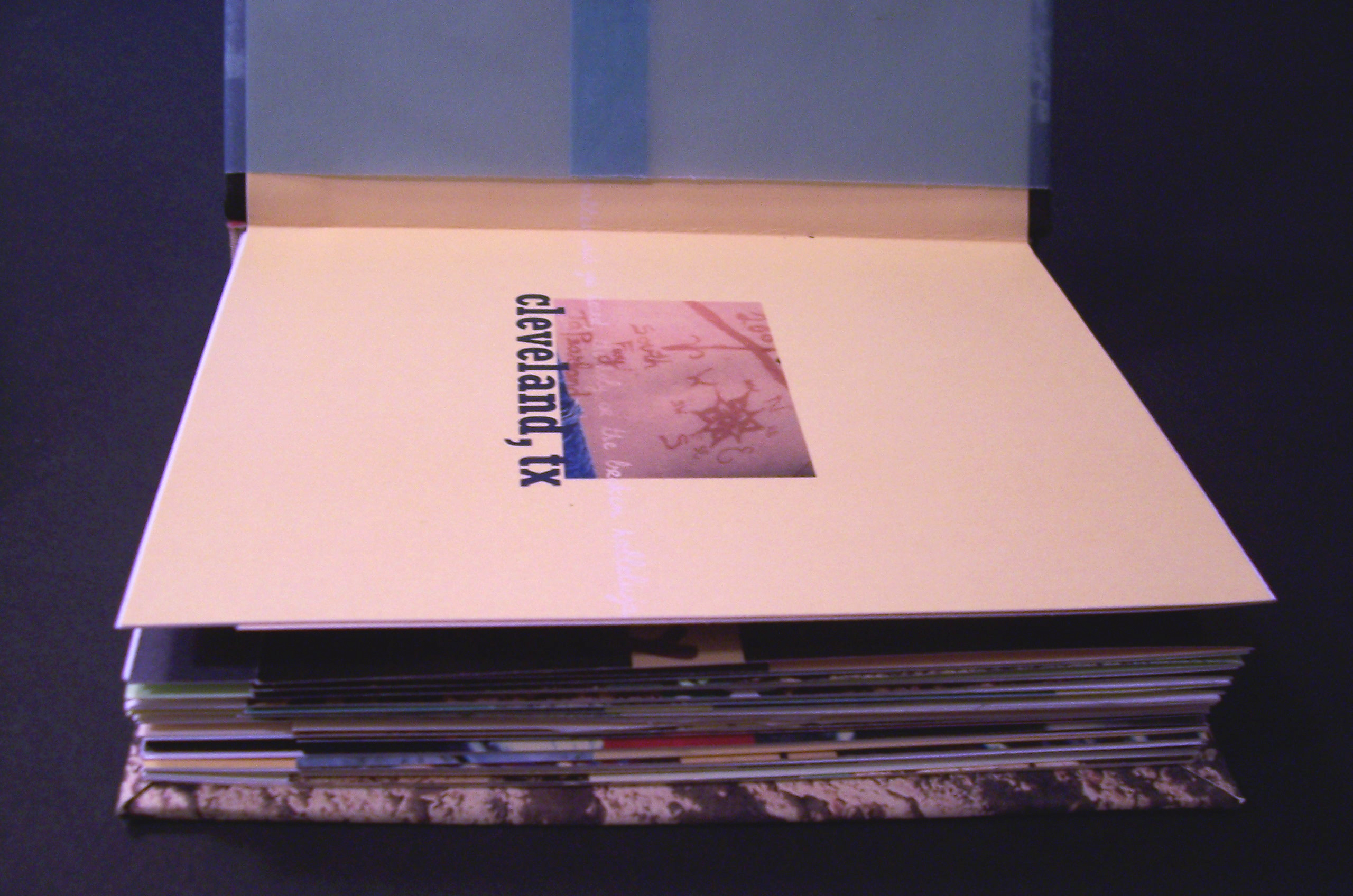
My horror story and mock urban legend, “What Goes Down, Must Come Back Up,” is also up at the online journal Rougarou. You can read it here. This story was inspired by my stay at the Artesian Lakes Resort in Cleveland, Texas in 2009. It was certainly an experience I will never forget, and I’m always happy for my work to appear in any journal named after a mythical monster. Especially one that is so specific to location and the South. However, I’m quite sad that they can no longer afford to give contributers bottles of Tabasco as payment…because that really would’ve been the icing on the cake!

Raffie Goes to the Olympics

News

I added a new video on YouTube a couple weeks ago of a flip book I made for my sister’s birthday.

“Raffie Goes to the Olympics *as a spectator” is an flip book (bound with a version of the Koki Toji, or Noble Japanese stab binding) about a young giraffe who desperately wants to be an Olympic-level gymnast, despite his size, body build, and the disapproval of those around him.

The song is “Party With Children” by Ratatat, no copyright infringement is intended.

Hallelujah

News

front endpages of "Hallelujah"

Last month,  I finally finished a collaborative book project I’ve been working on and off (mostly off) for an entire year.  I’m glad I finally completed it as I can now focus on other projects.  Current and upcoming projects include: re-binding a flipbook about a hard-working giraffe who just wants to be a gymnast, a thin volume of collected quotes from Kent Boyd of SYTYCD, a tin full of Edward Gorey-inspired blank books, and hopefully participation in the 2011 Sketchbook Tour, among other things.

In terms of writing, I’m sending out a few more things this week.  Hope something will come of it.

What Happens Behind Boarded Windows…

News

I forgot to mention this earlier (probably because I haven’t been posting) but right now the best place to read excerpts of my novella The Butterfly Collector and view other images of the corresponding art books is here at the UH Honors College website.

Onto the real news: I got official word yesterday that two of my poems will be appearing in the upcoming Fall/Winter issue of Poet Lore.  The two poems are “House of Cards EP” (which I wrote in 2007 about my sister being carjacked at gunpoint) and “What Happens Behind Boarded Windows” (which I wrote earlier this year about Hurricane Ike).  This will be my first major publication, so I’m fairly excited.  Frankly, I never in my wildest dreams thought that my poetry would be published before my fiction, but I suppose stranger things have happened. 

I made a deal with myself that for every poem or short-short that gets accepted by a publication, I have to write two more (strong) poems/shorts by the time it actually appears in print.  I might have to come up with a different rule for electronic publications and longer stories, but for now that’s what stands.  I hope to send out more poems and get some shorts out by the end of the month.

The Pinwheel

News

There I go, not updating again.  It’s quite sad really.  I’m also not sure why I updated in mid-January and didn’t mention what was going on around that time.  Strange. 

Anyway, I’m hoping to launch my own domain and official website some time next month, but I’ve put up a temporary portfolio here.  Although I am still adding images, it’s the best place to see some of my work now.

I should have some exciting news soon!

The Inside, The Outside

Musings, News

I wrote this on November 22 but I’m an idiot and saved it as a draft instead of publishing it.  Well, I’m publishing it now, and no, I’m still not ready to talk about House of Leaves.

Wow, almost 2 months since my last update!  I knew blogging regularly would take some getting used to.  Part of the problem is that I’ve been ill and also unmotivated lately.  I’m working on a variety of projects right now, but I seem to be stuck on all of them, or at least plowing through them rather sluggishly.  More details to come when I’m closer to completion.  Also, I finally read Mark Z. Danielewski’s House of Leaves in its entirety at the beginning of October and wanted to write about it but haven’t felt quite ready.  It’s a brilliant work of literature, definitely an inspiration to those who write experimental fiction.  Hopefully I will be able to devote a post to it soon.

What I want to talk about today are common themes of YA fiction.  A lot of the novels I grew up reading featured protagonists who were outcasts, who were hiding some sort of secret, who felt uncomfortable in their own skin somehow or felt they didn’t belong.  Often, they were insecure, didn’t think they were pretty or good-looking–sometimes overweight or plain, but definitely not homecoming queen material.  However, they were usually “beautiful on the inside,” that is to say that they were very kind or thoughtful, maybe smart or talented.  I can’t speak for other countries, but in America especially, we seem obsessed with teaching our children that it’s what’s inside that counts, and these types of stories seem to be the result.  I’ve always found myself more fascinated by characters on the other end of the spectrum though.  The girls or boys who seem to have it all on the outside (usually cast to a supporting role in YA lit) but are really quite ugly on the inside and often unlikable.  They seem to be the characters I enjoy writing most.  Just a couple hours ago, I wondered about converting that idea to something more visual and tactile.  A series of art pieces that have a clear “outside” and “inside,” where the beautiful hides the not-so-beautiful.  It would definitely force me to explore what the definition of beautiful is in each circumstance.  Anyway, obviously that idea needs some developing but I think there might be something there.

Until next time.

A Way to Understand

Musings

My last post back in November (?) seems to have been deleted.  How strange.  In any case, it has again been a long time.  A difficult time, one might say.  But what to say right now?

Back in high school, I started writing a story from the first person POV of a guy who was beating his girlfriend.  I’ve been trying to find it again (so far, no luck) because I had the sudden urge to continue it.  In creative writing, we often discuss the use of first person vs. third person in a work of fiction.  For longer works, I tend to prefer first person.  It’s not because I’m more comfortable writing first person or because what I’m writing is autobiographical.  It’s because when I was a child, I wanted to act before I wanted to write.  I enjoy being other people, not just observing them.  That makes all the difference for me.  And when I write a certain character, it’s because I want to understand him/her.  I wrote The Butterfly Collector because I wanted to understand a girl who steals and lies and sleeps around, who misses this idea of her father so much that she would do anything to get closer to him.  It was a difficult character to write, in the sense that I had very little personal experience to feed off of, and also in the sense that it was hard for me to be so close to someone, fictional or not.  In the end, I think I came away with a much richer understanding of the character, however.  Right now, I’m very interested in the mindset and past of an abusive person.

Thick Skin

News
Baby, It's Cold Out There (BACK, CLOSED)
Baby, It’s Cold Out There (BACK, CLOSED)

A couple weeks ago, I finally finished a project that has been at least a year or two in the making.  While writing my senior honors thesis (a work of fiction that takes the reader through a girl’s life as she tries to find ways to co-exist with a father who died a couple weeks after her birth), I was thinking about books jackets as literal jackets or layers clothing that someone might put on or take off at any point in their lives.  In this piece, each layer or “jacket” represents one of the 18 years in Lyssa’s life (although I only made jackets for 8 of the more intriguing years, for practical purposes) and each has cutouts that reveal parts of the jacket underneath, or the year before, it: the past is visible in the present, is visible in the future.  This story to me is all about time and our bodies and what we choose to conceal and reveal, both in our heads and outside of them.  At the same time, there is also the idea that you put on a jacket when it’s cold, or take it off when it’s hot.  Lyssa is a character who seems to have very clear associations to temperatures, especially extremes like hot and cold.  And yet, I think there are times when the two blur together.  By the end, it’s a modern “Icarus and Daedalus” story.  To her, the sun is hot and the water is cold, so she thinks: I like the cold, it reminds me of my father, I choose the water.  But you still die.  In both extreme instances, you die.  There has to be some in-between and she has to find that.